As most of you probably don’t know I have transitioned all of my horses to be barefoot over the course of last winter. We are now almost a year in and boy have I learned a lot.
So where did this urge to go barefoot come from? I went to a clinic with Leslie Desmond where she stated that all horses should be barefoot and that shoes, while maybe helpful temporarily, only hurt the horse in the long run. As much as I denied that statement, it planted a seed in my head. As I learned more about the hoof and looked closer at my horses’ feet I realized that all of them had huge issues being covered up by the shoes. At the same time London was having major issues being trimmed as he just couldn’t hold his feet up for long enough to get them trimmed in one sitting.
London much happier after our diligent work on his feet.
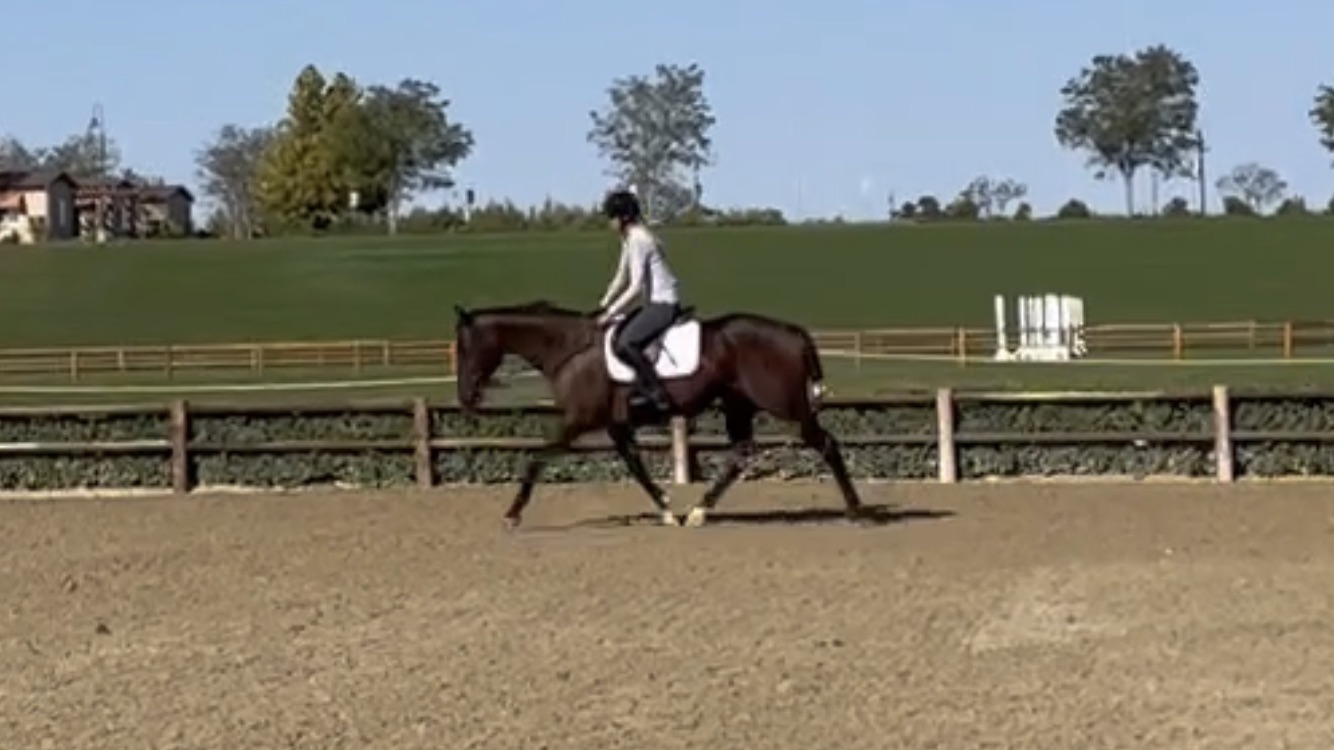
Along came the opportunity to learn how to trim feet from a new student that trimmed her own horse. I jumped on that opportunity and dove into learning as much as I could. Snuffy’s shoes were pulled and the immediate difference in how he went in the arena was mind blowing. As I learned more about trimming I started to realize that I could change the horse’s entire stride with one or two swipes of a rasp. It is such a tiny change in angle and yet in the walk it was a monumental change. That’s when I became more invested in the barefoot journey and I pulled the remaining shoes in the barn.
Slowly rehabbing the horses’ feet has really opened my eyes to the huge biomechanical issues poor feet have on a horse. Issues I was fighting for years to try to fix just melted away. Now I’m working on such minute details in bodily tensegrity and I long for the day when even the work I do now seems massive.
The other conclusion I’ve come to is that you cannot simply pay a farrier to come out every 4-6 weeks to trim your horse. Especially when that horse has issues. In even 4 weeks the hoof goes through such drastic changes that you are fighting a losing battle. When London suffered severe laminitis I was correcting his angles weekly if not every 4 days to encourage correct growth. Short time frames are especially important when there isn’t s lot of hoof to work with so you need to make your changes with very little trimming.
Trimming feet is also so much more than a science. It’s an art and you develop both the eye and the feel for how it is done. Not just that – eventually you can connect the feet to the body and when you watch a horse walk you can see how a different trim would make a change for the horse. One size doesn’t fit all and there is no perfect foot when you are dealing with live animals and an entire unique skeleton. The more I trim the more I learn how to support individual issues a horse may face to compensate for them in a healthy manner.
While I’m certainly not an expert and would never claim to be, I hope more people start to get on this barefoot journey and learn how to properly support and care for their horses’ feet. I’m certainly not trying to get horse owners everywhere to take up a rasp and start experimenting, but I’d love to see hoof trimming become a part of horse ownership just like feeding and other horse management tasks. It would be great if more people would take an active role in hoof health and learn to support a qualified trimmer in between visits.
Shoes definitely still have a place in the world and serve a major function so I also don’t want everyone to just pull shoes with no regard to the hoof itself. I do think metal shoes are wholly outdated and could be replaced with composite shoes. As we learn more about how important the flexion of the hoof capsule is for the health of the entire musculoskeletal system I can’t see any need for the continued use of shoes that prevent that flexion. Clearly barefoot offers a huge range of advantages for the horse, but not every hoof is ready for that step. Composite shoes, boots, and even casts can be a great alternative for horses that need additional support for a compromised hoof.
None of the horses whose shoes I have pulled were lame after initial trimming and none of them needed additional support for light arena work. I did often need boots for the additional impact of jumping or riding on gravel, but basic soundness should be a given. If you don’t have that definitely look into a composite shoe or other options.
Hopefully this blog both inspired you and educated you on just how important the hoof is for the horse and the steps we can take to better care for the hooves. After all, if you have no hoof you have no horse.
0 Comments