When I’m working with horses and riders one topic that comes up almost every single lesson is boundaries. In fact with most “problem” horses you can track the roots of the issue to a lack of boundaries, unclear boundaries, or confusing boundaries. It seems that most of the horse world lives in a place of constant punishment for boundaries that lack clarity or a place of fear that they may be being too harsh or restrictive. All this leads to confused and upset horses.
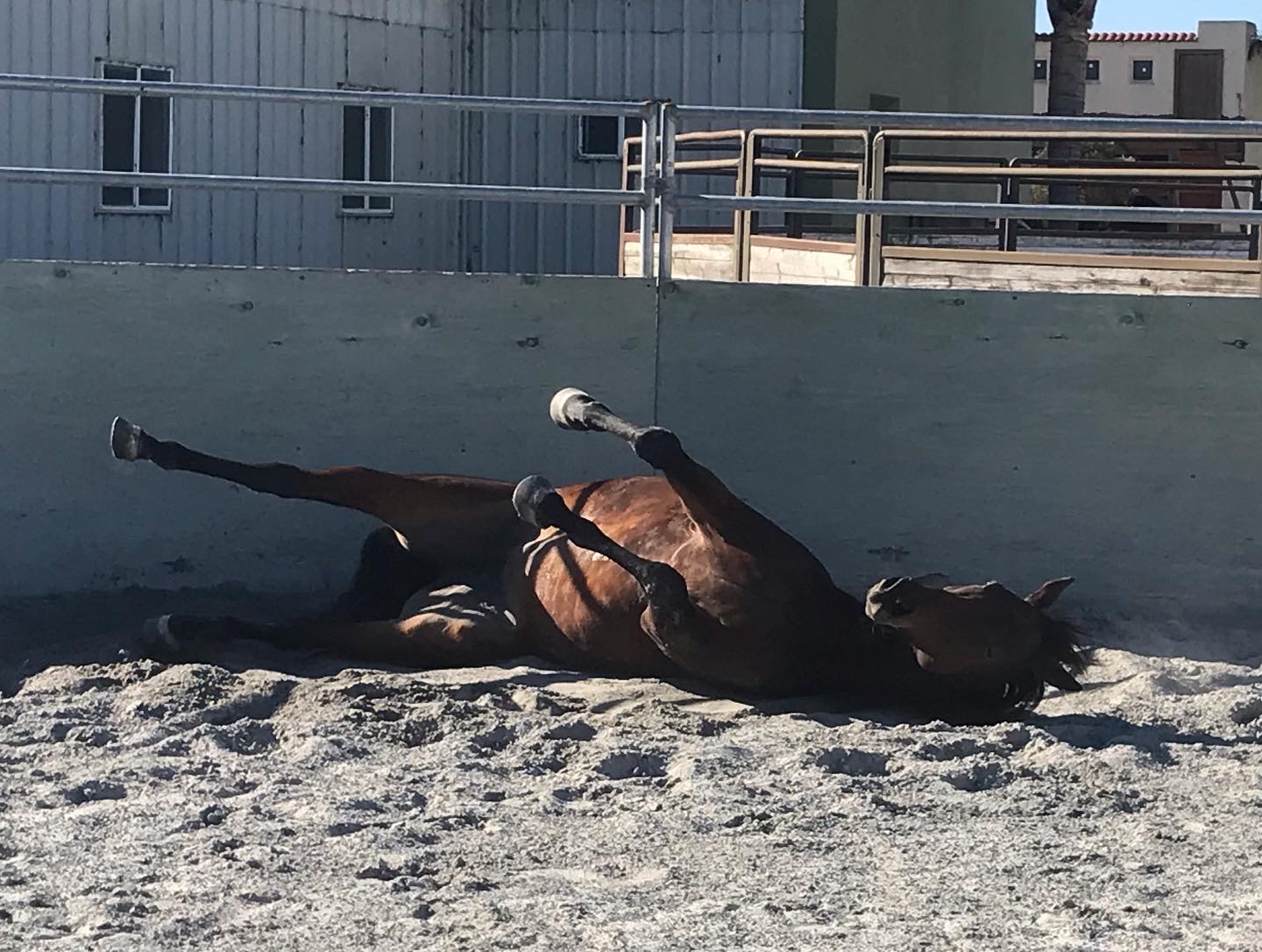
In this picture Lucy is able to relax and roll in the round pen because she feels comfortable with the boundaries she has and understands how she is allowed to make her own decisions within them.
So why are boundaries important? Think about how you would feel if you were told to turn in an art project in a class, but we’re given no requirements for the task. At first that seems great because you have free range to do whatever you want to do. Now imagine you turn in that art project and are told it isn’t acceptable and you have to redo it. How is that going to make you feel? Probably very upset. You are going to want to know why it wasn’t acceptable and what the actual requirements are. This is the position we put horses in constantly.
You may be thinking to yourself that you aren’t setting unclear expectations for your horse because you don’t set any expectations. While that’s a fine sentiment it isn’t exactly accurate. Despite how much we may want to not set expectations we do expect our horses to do numerous things daily. We expect them not to hurt us, we expect them to stay soft and supple in their bodies and minds to yield to our ideas, we expect them to not act out in rage or fear. No matter how much you may not want to have expectations your safety around horses is reliant on this unspoken social code.
When you are lax with boundaries and let the horse be a little bit pushy or a little bit slow to respond you are making that boundary muddy. For instance you may be riding and put your leg on to ask your horse to go forward into a trot. Your horse takes a couple steps to think about it and then obliges. You allow that because in the end he did trot. Fast forward to five rides from that and you find yourself in the same situation. Except what was a few strides has now turned into your horse plainly saying “no” to your request. So you get bigger and demand that the horse moves into a trot. That wasn’t fair because you haven’t set a clear boundary. Over time if you remain inconsistent your horse will start to learn to push on the boundary and fight about it. Pretty soon a horse that was questioning your leg and simply tuning you out is now bucking, rearing, and throwing a fit about your leg. What started out as you trying to be kind and compassionate to a horse that didn’t feel like working created a problem horse.
Obviously we all know setting too many harsh boundaries will make a horse scared and afraid to make mistakes. There is a clear difference between staying clear in your boundaries and punishing a horse for trying or not quite getting the correct response. But if you know your horse knows what you are asking you are so much better just upholding your boundary and having one big argument than stretching that argument out over time and creating a tense and upset horse.
Most horses I see live in a constant state of tension. Their kind compassionate owners unknowingly create and nurture this tension with every pass they give their horse and every time they say “oh he just doesn’t want to do this today”. Kindness comes from utter fairness and clarity which in turn allows you to be softer and quieter when your horse crosses the line. Eventually just the hardness in your body as you subconsciously think “no” is enough to get your horse to rethink and try a new answer. Eventually just your silence means “no” and you can keep saying “yes” over and over again. Then boundaries feel less like being a dictator and more like a flow of conversation. But it’s ok if it needs to be messy at first. And it’s ok if you need to be big. Especially if your horses hasn’t had clarity and hasn’t found the strength to be present in the midst of the confusion.
0 Comments