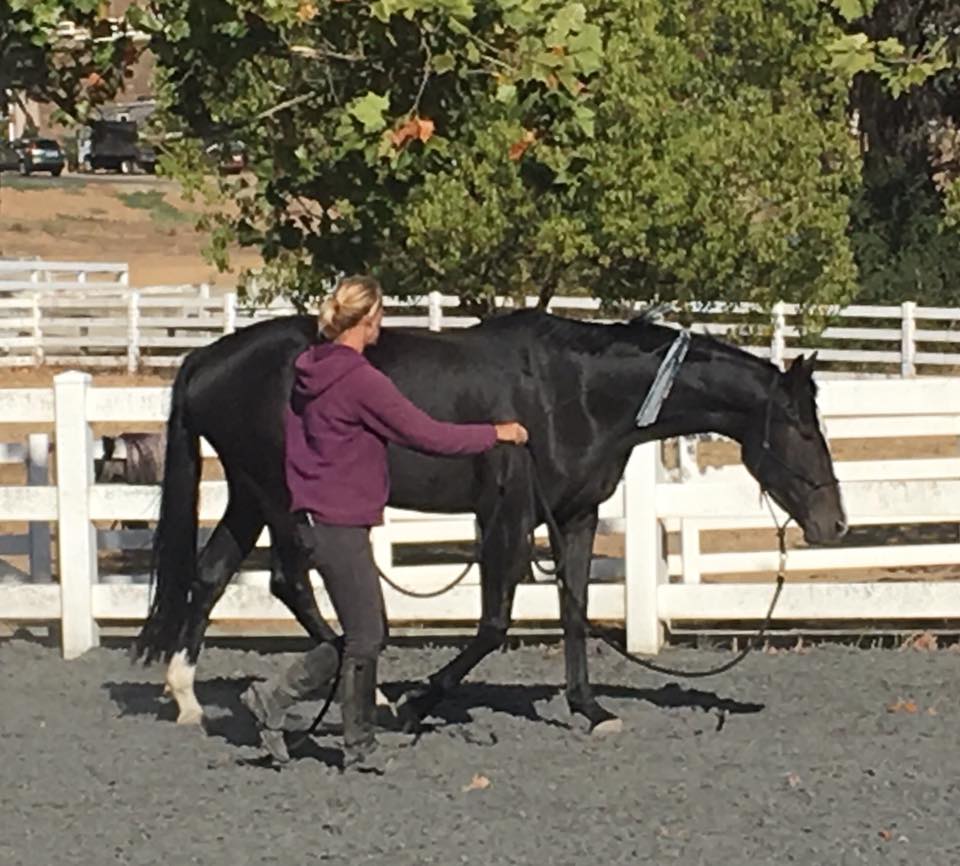
It seems to me in this whole world of horses everyone is always rushing. We hurry to tack up, to get on, to finish our ride, to get to the show, to get home, to…
What’s the point?
Why do we even bother riding if that’s how we really feel?
I think our whole culture of rushing around to get everything done is the single most damaging aspect of our horse’s training program. By pushing ourselves to meet deadlines we put an extreme amount of pressure on our horses to perform. We label horses as “bad” or “difficult” because they can’t keep up when they really just need us to take a breath and slow it down.
I’ve always been a firm believer in slowing things down, fixing each small issue, then moving on. I sometimes spend months on the ground before I ever get on because I know when I do I’ll have a perfect ride.
For me, working with horses isn’t a series of goals and deadlines and demands. Instead, I am always chasing a feeling. It’s addictive once you’ve found it and you can’t ever quite get enough of it. It doesn’t matter if you are walking from the pasture into the barn or are jumping a 3′ fence, when you find a connection with your horse you can’t, and won’t, give it up. It’s a feeling of power, control, and unity that comes from being able to direct your horse with a single thought.
I wish more people could stumble across this feeling because I think our show rings would get a lot emptier and our horses would get a lot happier. That isn’t to say you can’t show and be 100% connected with your horse, it’s just a lot harder to do it and takes a lot more time and preparation.
To really experience this level of connection, you have to have built a solid foundation of ground work, trust, and respect with your horse. This requires slow work.
What is Slow Work?
Slow work is a generic term for high concentration, low movement exercises to enhance your relationship with your horse.
Some people do slow work to improve their horsemanship and allow them to communicate more clearly with their horses. Others are already excellent horsemen, but practice slow work to make their horses better partners. Most people fall somewhere in the middle where slow work is an excellent way to build their partnership with their horse both by making them more competent and their horse more accepting of the partnership.
When practicing slow work, you are improving your feel and timing so that your aids can be subtler and more effective. Throughout your slow work you should be asking yourself:
Is my horse engaged?
Is he relaxed?
Is he willing?
Is he supple?
This is the very basics of feel: knowing when your horse makes a change from the state you want him in.
In slow work you are breaking every ordinary movement down into the smallest imaginable pieces and asking each of these questions at every step. Before moving on, you address all of these questions so that your horse never strays far from a relaxed and attentive state.
The other important part of slow work, and perhaps the more difficult part for the average horseman, is timing. Timing is coming in at the right time with the right energy to affect a change in your horse. During slow work the change you are trying to affect is returning the horse to a soft and willing state.
As you become better at slow work, you will be able to do less and less while getting more out of your horse. You start to notice that too big an aid startles your horse while too little of an aid is ineffective and leaves him confused. You also develop a feel of when to step in to not be micromanaging your horse, but also to not let him get lost or stressed. By breaking every movement down, you have time to really see the cause and effect of your actions that you would have completely missed in your regular work. With time you become better and better at balancing your horse’s stress and attentiveness so that you do not have to sacrifice one to have the other.
Similarly, slow work teaches horses to be more focused and relaxed in their work. By taking the time to remind your horse to pay attention every time he starts to get distracted, you are gently teaching him to remain focused. Every time he tenses up or resists, you are encouraging him to relax, stretch, and breath. More than anything, slow work teaches a horse how to learn. It teaches a horse to think and try without getting anxious or worried as well as encouraging horses to seek relaxation and a connection with their handler.
How Do You Do Slow Work?
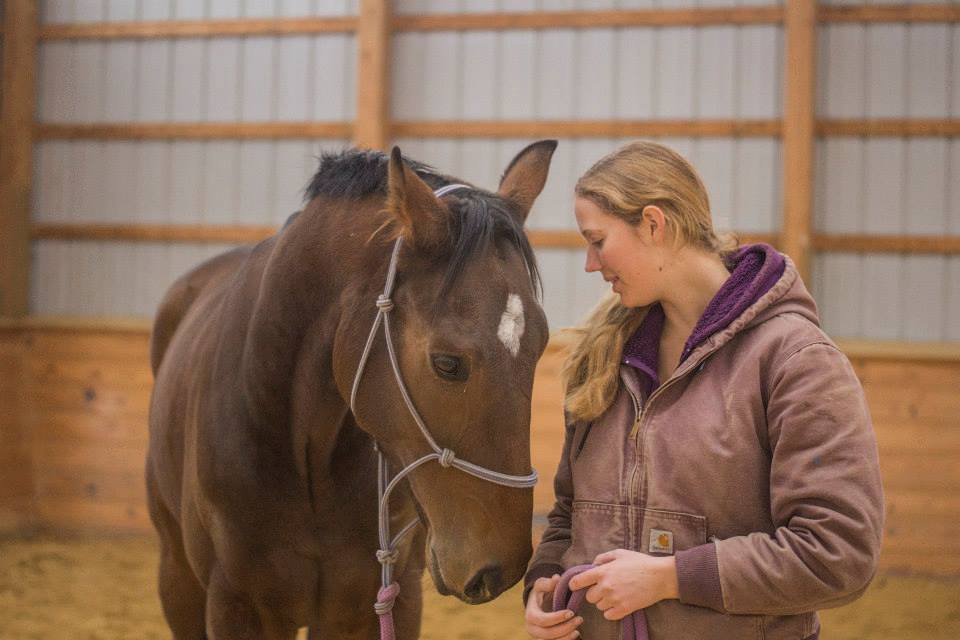
One of the simplest forms of slow work is lowering the horse’s head. This exercise works on suppling and relaxing the horse since lowering the head is a natural way for a horse to relax. It also teaches the horse to respond to light pressure, which requires focus and willingness from the horse. For more information on how to lower your horse’s head, check out our how-to guide here.
Once you have the basic principles of slow work down, you can turn any exercise into slow work. For example, instead of getting from Point A to Point B when leading your horse, make sure your horse is staying relaxed and with you. Every time you start to lose this stop and get it back before continuing to walk. Simply asking your horse to stop when you stop your feet checks whether he is paying attention. If he doesn’t stop, get bigger until he comes to a halt. If this leaves him anxious, ask him to lower his head before continuing. You can also ask your horse to back up every time he doesn’t stop with you. Make sure he is backing up with the slightest cue before continuing to walk forward.
The key to slow work is attention to detail. Take any activity, break it down into the smallest steps, and make sure each step is performed soft and willingly before moving on. Keep the activities short and simple at first to set you and your horse up for success. Make sure to reward progress by giving the horse space and time to process. You will notice that a little bit of slow work will change your whole relationship with your horse.
What are your thoughts? Leave a comment below and let me know whether you’ve tried slow work and what changes you noticed in your partnership.
0 Comments